
Introduction
Many parents of neurodiverse children are concerned when their child avoids physical activity and begins to gain excess weight. Children with Autism Spectrum Disorder (ASD), ADHD, or motor coordination challenges often experience difficulties with movement due to sensory sensitivities, low muscle tone, or poor body awareness. This reduced physical activity can gradually impact their overall health and confidence.
Major Issue: Physical Inactivity
Physical inactivity is one of the most common concerns in neurodiverse children. When a child avoids movement, it may lead to:
- Gradual increase in body fat
- Low energy and quick fatigue
- Poor muscle strength and posture
- Reduced participation in play and social activities
This inactivity is not due to lack of effort—it is often linked to how the child’s nervous system processes movement and sensory input.
Key Intervention: Sensory-Integrated Movement Therapy
Sensory-Integrated Movement Therapy is an advanced physiotherapy approach designed to help neurodiverse children feel safe and comfortable while moving their bodies.
This therapy combines physical exercises with controlled sensory input to support better movement experiences. Activities are play-based and enjoyable rather than structured or forceful.
How the Therapy Helps
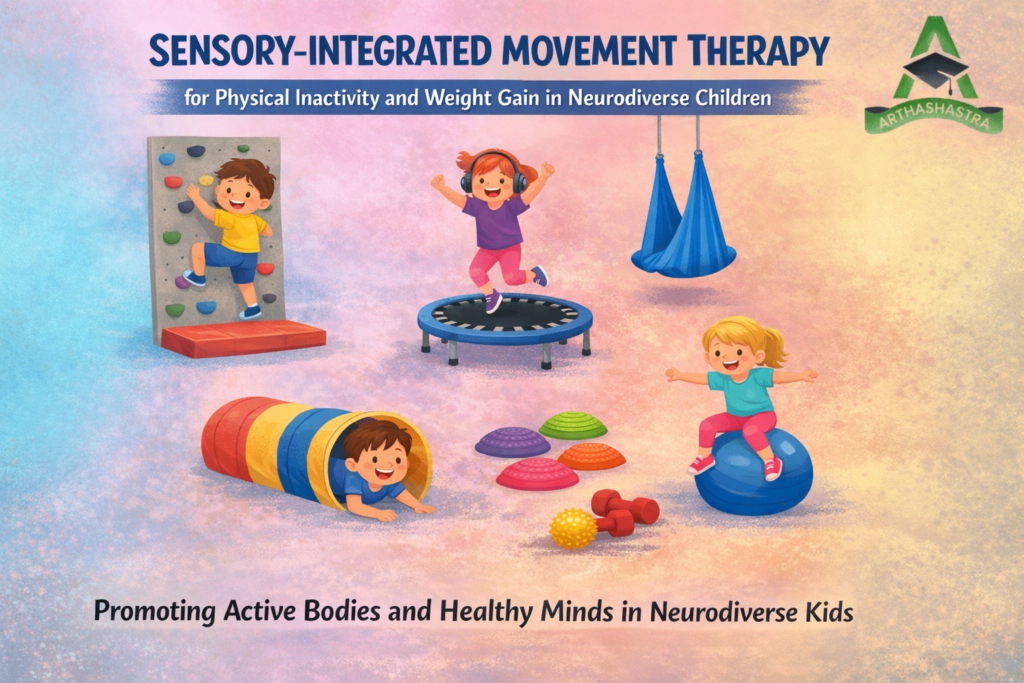
During therapy sessions, children may participate in:
- Pushing and pulling activities to improve body awareness
- Balance and coordination games
- Resistance and deep-pressure exercises to calm the nervous system
- Fun, goal-oriented movement tasks that match the child’s interests
Each program is individually planned based on the child’s abilities and tolerance levels.
Impact on Weight and Health
When movement becomes comfortable and enjoyable:
- Children naturally become more active
- Muscle strength improves, increasing calorie usage
- Energy levels rise and sedentary habits reduce
- Healthy fat loss occurs gradually and safely
The focus is on long-term health, not quick weight loss.
Benefits Observed by Parents
Parents often notice:
- Increased willingness to move and play
- Better emotional regulation and focus
- Improved confidence and independence
- Reduced resistance to physical activities at home and school
Conclusion
Sensory-Integrated Movement Therapy helps neurodiverse children build a positive relationship with movement. With consistent support and patience, children can improve their physical health, confidence, and participation in daily activities—leading to healthier growth and development.
